




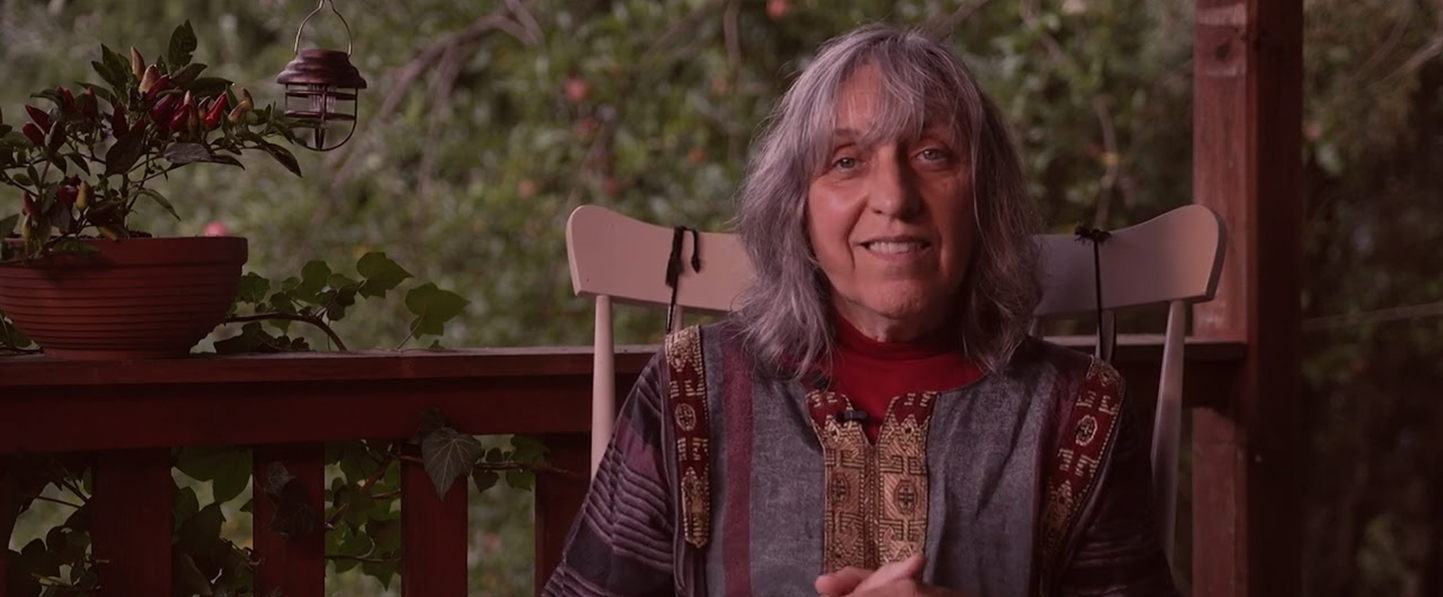

Tantric teacher Sugandho
Tantra, a teaching thousands of years old and yet still alive, focused on the art of sacred sexuality, continues to develop even today. Tantric teaching is based on experience and personal insight, which is why tantra has always been passed on from teacher (guru) to student. There is therefore no clearly written code defining exactly how tantra should look. What matters is the intention and the philosophy behind it. Each guru, today we call them teachers, has thus adapted tantric teaching to their own vision and personal experience of tantra. Tantra therefore often overlaps today with shamanism, art and modern psychotherapy.
When practiced over a long period of time, tantra dissolves various physical and psychological blocks, makes a person freer and more open, and can therefore be said to have a therapeutic effect. Today, tantra attracts many experienced psychologists and psychotherapists who approach it as a method of human development. Because tantra does not avoid working with intimate levels and topics, often beyond the boundaries of classical psychotherapy, some therapists convert to tantra and become its teachers.
Such is also the story of Ma Prem Sugandho, a German tantra teacher and direct disciple of Osho, who also studied psychology at university and for many years has been holding her tantra courses in the Czech Republic. Take a look with us into her life and her understanding of tantric teaching.
Bc. Michaela: In your biography you write that you studied psychology. The fields of psychotherapy and tantra partially overlap. Both lead to healing traumas from the past and try to help a person reach a full life. Where do you see the main difference between psychotherapy and tantra, and what are their limits? Are they similar in any way?
Sugandho: The main difference between tantra and psychology, as I understand it, is the absence of meditation in classical psychology. Traditional psychology focuses on diagnosing and healing what is ill. I miss the spiritual dimension in it, thanks to which healing does not only lead to a change in behavior, but to transformation.
Tantra contains much more than just healing trauma. It is a different way of living all dimensions of human life. Traumas and wounds must not be overlooked, but they are not the main theme of tantric work. We focus on them in order to prepare the ground for a tantric life.
A tantric life is a life lived in meditation. Meditation, sensitivity, joy ... should permeate all aspects of our life, from sexuality through work to the simplest everyday activities.
Bc. Michaela: Your courses have a wide scope, not only in the area of sexuality. Which areas of human life do you focus on in your courses?
Sugandho: In my work I focus on the energy centers in the body, the seven chakras. Each chakra has its own themes that I work with:
The first and second chakra relate to sexuality, our need to live socially and in intimate relationships, memories of childhood, physical survival.
The third chakra works with the use of our personal power, our dignity, freedom, etc.
The fourth chakra is our connection to the spiritual heart, but also to the physical and emotional heart, and to the development of love from the individual toward the social and cosmic dimension of love.
The fifth chakra works with self-expression, trust and communication.
The sixth chakra relates to inner vision, clarity of mind and meditation.
The journey through the chakras truly covers many aspects of human existence and helps a person look at their life with greater awareness. Our lives thus come alive with colors, spontaneity and flow. In daily life this means we have more choices and more resources for responding to the challenges that life brings.
Bc. Michaela: Tantra is a very ancient teaching and its contemporary form certainly differs in many ways from the original. Many tantra teachers adapt their teaching according to what they themselves consider good, helpful and appropriate. How would you define your approach to tantra and what do you draw from for your courses?
Sugandho: Tantra has deeply imprinted itself into my life. Thanks to tantra I understood what an immense gift sexual energy is, and I learned how to use this energy in many different ways. Sexual energy and freedom bring joy and sensitivity into everything we do. They bring real aliveness and help us realize what a precious gift our life is. What I do is based on the teaching of the mystic Osho, whom I met personally. His entire teaching is about bringing tantra and tantric energy into everything we live.
Bc. Michaela: How do you view monogamy and polygamy? And how do these topics appear in your courses?
Sugandho: The topic of monogamy and polygamy appears at virtually every seminar I lead. How to fully experience sexual energy while living in healthy relationships is a question that touches many people I work with. Especially because during seminars people open to each other more than usual, and this automatically brings up this question. There is no universal answer, only a personal effort to live authentically and in love. Tantra taught me that sexual energy needs to be expressed, it must not be suppressed. However, what people often do in the name of sexual freedom can also be an escape from intimacy, an escape from conflict. I therefore prefer individual work with this topic rather than general statements. Seeking balance between freedom and commitment, freedom and responsibility, freedom and trust, is the path we walk.
Bc. Michaela: How did you yourself come to tantra, and what do you try to pass on through your courses?
Sugandho: I came to tantra through Osho, whom I consider a true tantric master. He especially supported women to be able to experiment with their sexual energy and explore it. Female sexuality has been significantly suppressed throughout history. Osho also stated very clearly that in tantra many steps await us, and that desire is only the first rung of the ladder. When we use sexual energy for transformation, it leads us to unconditional love and also to prayer, which I understand as the result of meditation.
In my work I try to convey the message that every person has the right from birth to live a happy and fulfilled life. I try to give people the courage not to give up this right and to overcome all obstacles and reach their goals and fulfill their desire. To reach the place where every small and large act is filled with joy and life becomes a dance, a celebration.
Bc. Michaela: What is your relationship to the Czech Republic and what actually brought you here?
Sugandho: I like this question because I have never asked it myself. I lived in Germany for a long time and never visited the Czech Republic, which at that time still belonged to the Soviet bloc. When I was invited here about four years ago for my first seminar, I was surprised to meet people with big hearts, people full of gentleness.
Bc. Michaela: In the annotation you write that you will help people realize what has value for them. What are the values in your life, what brings you joy, what helps you when you are sad?
Sugandho: The highest value in my life is meditation. Meditation has saved my life more than once, meditation is something I can always rely on. I carry it within me wherever I go. All I need is to close my eyes and enter inside. Thanks to meditation my life is balanced and rich. Meditation gives me the courage to take risks when necessary, to relax as much as possible and to be part of life. I have learned to enjoy sunny as well as cloudy days and I have given up fighting when things do not develop according to my wishes.
Bc. Michaela: Do you have a favorite place in the world that you like to return to, and why?
Sugandho: Yes, there are two places where I feel at home. One is Pune and the Osho Meditation Center. I have been going there for 28 years. It is my spiritual home. Once a year I recharge there, visit the center and together with friends become part of an experiment of spiritual growth, an experiment toward greater and better love.
My second home has become Israel, especially its desert. I have spent most of my time in Israel for a long time now. I love the Mediterranean climate and the mixture of Arab and European lifestyle, despite the fact that it brings many difficulties. Through my work I try to contribute with what I know to peace in the Middle East.
Bc. Michaela: Were there any important people in your life who influenced you, and how?
Sugandho: Osho has influenced me since my twenties. He was and is the most important person I have met. Living and fulfilling his vision is the greatest gift for me. Thanks to Osho, this life is exceptional for me.
Bc. Michaela: Our readers would certainly like to know more about you. Could you describe what your usual day looks like? How do you like to spend your time?
Sugandho: My favorite days look like this: In the morning I am woken by my dogs, who want to run in the desert or in the dunes near Tel Aviv. Their liveliness reminds me how I should live my life. Before or after walking the dogs I meditate, and then I have breakfast with my loved ones. I like it when there is plenty of time and the day begins slowly. Then I devote myself to work: seminars, individual sessions, cleaning the house, working on the computer ... I think I have learned to like what needs to be done, and I do it with love, not out of duty.
Recently I have been learning Hebrew with a private teacher, my relative. It is not easy, but she gives me courage and I hope I will learn to speak Hebrew fluently.
A month ago I learned to kayak in the open sea, which is a beautiful way to meet the element of water. Sometimes we go kayaking at full moon near the beach in Tel Aviv. It is breathtaking.
Between adventurous work journeys, my life is quite simple. Soon I will be moving to a new house on the northern edge of the Israeli desert, where people will be able to come to meditate, attend seminars and spend holidays in the silence of the desert.
Bc. Michaela: Thank you for the interview!
Questions translated by: Alena Chrástová (Albi)



Founder of Tantra masáže Praha s.r.o., psychotherapist, manager, lecturer of tantra and personal development groups, coach, yoga and holistic bodywork lecturer, massage therapist (10 years of practice), author of the "Inner wave" therapeutic tantric massage technique, massage lecturer.
























 Our Studio

