






Tantra, an art originating from ancient India, is thousands of years old and yet still sought after today. In a time when people often search for inner peace amid stress and a fast pace of life, tantra offers a path back to oneself and to genuine experience. What is its magic? Why is it still so appealing to modern people? What can tantra offer us? And how should we approach ancient rituals if we follow another religion? Can tantra make sense even for atheists, Christians, or Buddhists?
Tantra in today’s world
The time we live in is fast, dynamic, and full of possibilities. It offers us a wide range of choices in every area – from housing, education, and travel to self-development courses. In this flood of options, it’s easy to lose oneself and start longing for something simpler, clearer, and more meaningful. For something that helps us return to ourselves.
It is no coincidence that at a time when stress, anxiety, and the need for genuine connection are growing, interest in tantra is also increasing. A return to oneself through the body, touch, and deeper awareness.
And this is where tantra has its place. Tantric massage, as well as tantric philosophy itself, honors the body and the connection between body and soul. Through the body, we can become more aware of who we are, what we need, and which direction we want to take in life.
The body as a compass
Our body gently tells us when it needs something, when it is happy, and when it suffers – through illness, joy, touch, and intimate connection. Tantra teaches us to perceive the body as a guide that helps us return to ourselves and find ways to live in harmony with our inner world.
Tantric massage respects the uniqueness of each person, their experience, and their needs. It encourages us to be kind to ourselves and pay attention to what we truly feel.
Touch as a way back to ourselves and to others
Tantra places great emphasis on conscious touch. Touch is something we all deeply long for, but not everyone knows how to give or receive it in a way that brings joy.
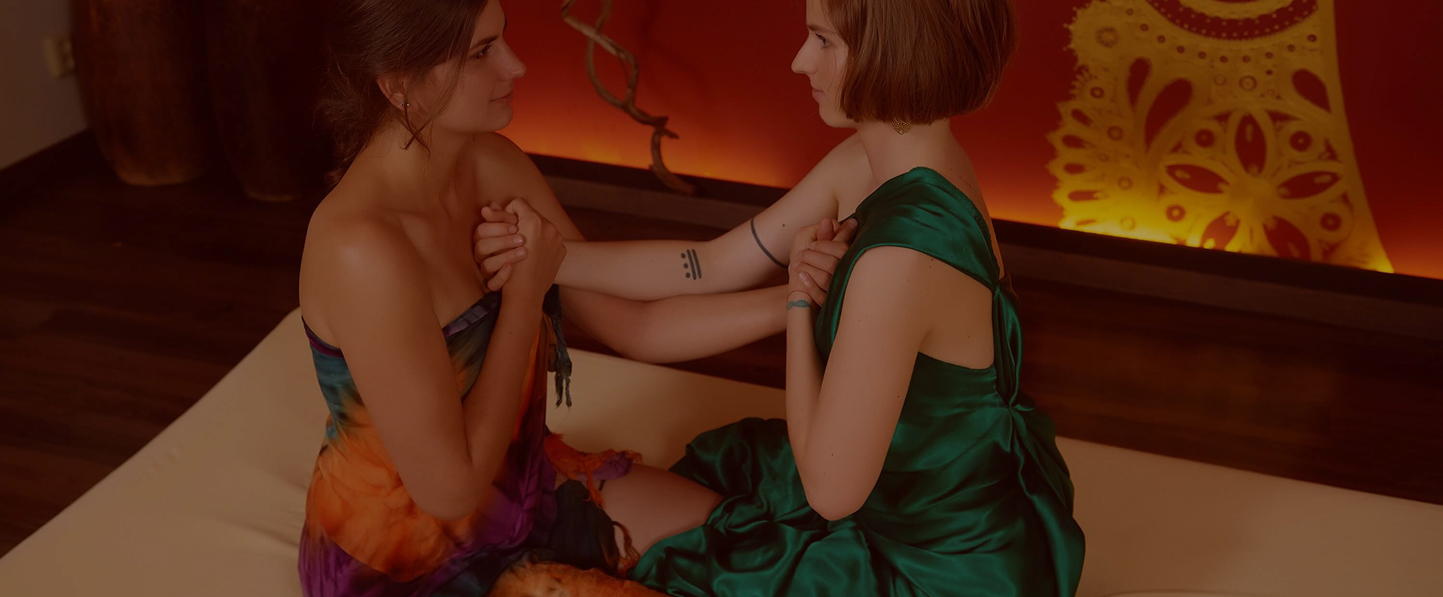
Tantric massage teaches more than just the technique of touch. It helps us perceive subtle signals, tune in to another person, work with energy, and be fully present. Then touch becomes not just physical contact, but a deep sharing that can heal and enrich.
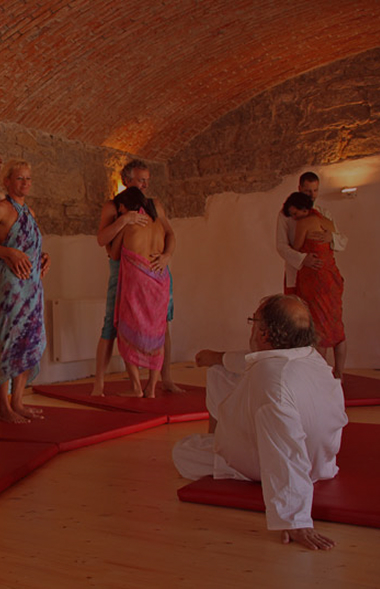
Imagine a moment when, instead of rushing or talking, you stay with your partner in a silent embrace. When through gentle touch you feel their heartbeat, breath, and energy. It is in those quiet moments that true connection can arise.
Tantra invites us to dare to be in the present moment, to open ourselves to perception, and to let ourselves be guided by what naturally arises between us and another person.
Tantra and religion
One of the great advantages of tantra is that it can be perceived in many ways. For believers, tantra can bring a deeper spiritual experience, where symbols such as Shiva and Shakti embody the creative energy of the masculine and feminine principles. But tantra can also be seen symbolically – as a path to harmony, balance, and the joy of connection.
Tantra does not require belief in any particular religion. It is equally valuable for those who seek a path to greater self-awareness, conscious presence, and a deeper connection with their body and emotions, without needing a spiritual framework. It encourages us to experience and feel our own reality. It offers a practical way to better understand our body, emotions, and relationships – regardless of whether we consider ourselves believers, seekers, or simply people who want to live fully.


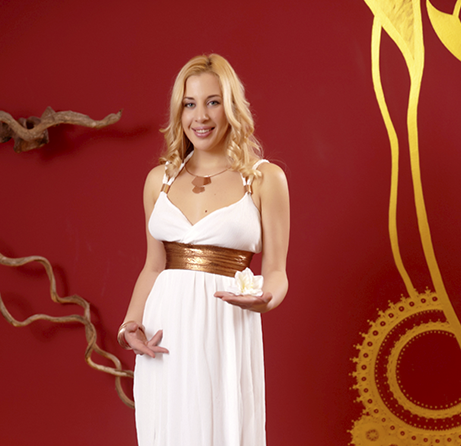
Founder of Tantra masáže Praha s.r.o., psychotherapist, manager, lecturer of tantra and personal development groups, coach, yoga and holistic bodywork lecturer, massage therapist (10 years of practice), author of the "Inner wave" therapeutic tantric massage technique, massage lecturer.







































 Our Studio