






Tantric massages have been quite a big topic lately. Tantra as such certainly deserves attention, but not everyone can say exactly what it actually is. Could you introduce it to our readers a little?
Tantra as a teaching and philosophy originated even before the 5th century BCE, yet today it is nothing distant or abstract. Many people who have practical experience with tantra say that tantra is a return to human naturalness. To a naturalness that, due to Christian roots, artificially created morality, the modern rushed era and its emphasis on performance and IT technologies, we have somehow forgotten.
Tantra as a philosophy reminds us of the importance of the art of living in the present moment, listening to our body and its needs. It leads us to discover who we really are and what we want, regardless of what our parents, society, or our partner think about it. It guides us toward inner freedom as well as acceptance of our own body and sexuality, which in tantra is perceived as sacred. With the help of meditation, rituals, and breathing techniques, tantra enables us to experience a feeling of deep unity with ourselves, our partner, the universe, and everything around us. It teaches us to accept our nakedness along with the imperfections of our body, heals our shame, teaches us to communicate what we need in a relationship, and opens the path to deep ecstatic experiences.
Tantra does not say how we should live or what is good and bad, because for everyone it is something different. It therefore teaches us to approach life openly and without prejudice and to first try and experience everything before we start judging it.
How did you yourself come to tantra? What appealed to you the most and what was the journey to the place where you are today?
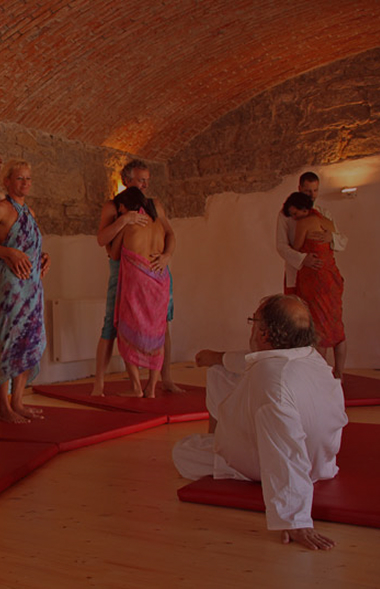
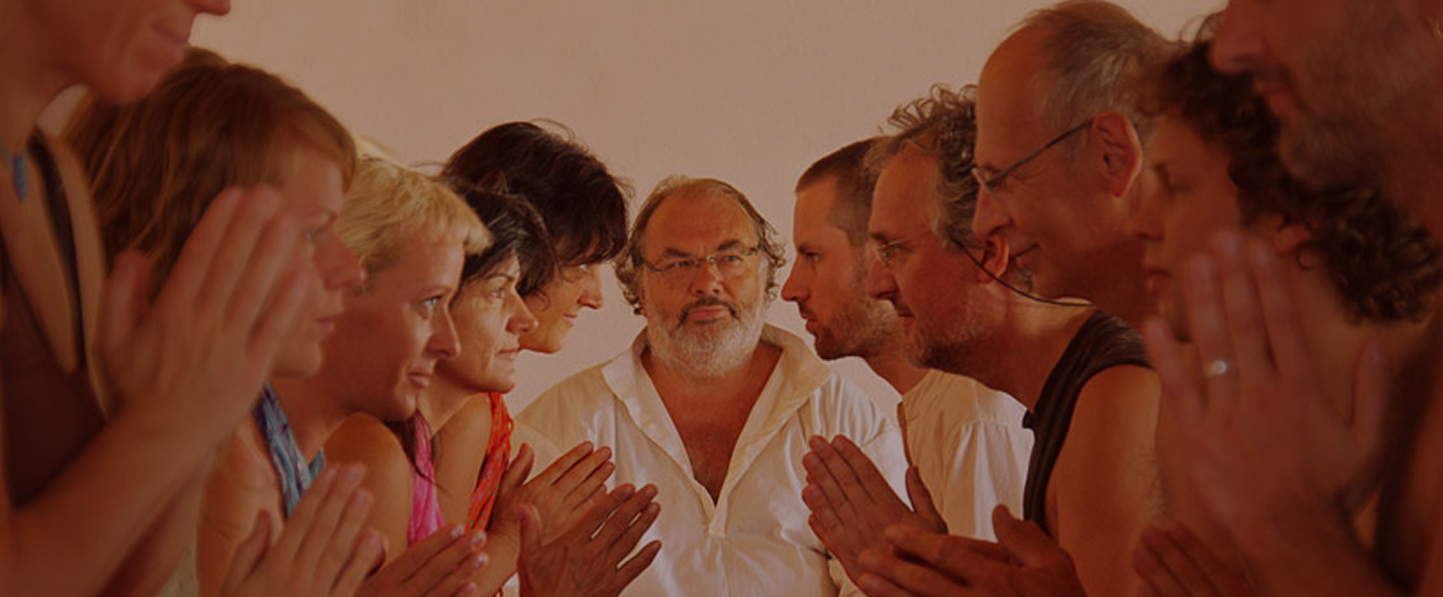
My path to tantra began when I was 18, when I discovered a flyer in the hallway of a language school advertising a weekend tantra course at Křivoklát. Something drew me to the course subconsciously, so I called the number on the flyer. The course organizer was very kind and explained everything nicely. At that time, hardly anyone in the Czech lands knew much about tantra. The course started on the very day I found the flyer and the next one was not until half a year later, so I had to decide quickly. The lady from the flyer even arranged a ride for me, so it was decided and I set off for the course that very day. My ride was an experienced tantrika, a man named Čestmír, who had already been to the course once and enthusiastically told me about tantra throughout the trip. I arrived with great expectations, which the lecturers Manguri and Albi fulfilled completely. I was absolutely thrilled. I met open, educated, interesting people who were looking for a path to themselves, to freedom, and to a certain transcendence. In the course, where there were almost twenty of us, we danced, meditated, sang mantras, shared, massaged, and did various exercises connected with awakening trust or, for example, taking off masks and beliefs about ourselves and the world. We learned how to touch consciously, how to be in contact, and how to communicate openly. The topic was also the perception of our own body, feelings, and our boundaries. Not the learned ones, but the ones we truly feel.
The course touched me deeply, so right after I returned I found books about tantra and soon went to a follow-up course, where I also met my then boyfriend Václav, with whom we jointly applied for a two-year tantra training with John Hawken. Back then it never occurred to me that one day I would devote myself to tantra as a lecturer or that I would have a tantric center. Tantra fascinated me and interested me and brought me insight and joy. I sought out various world teachers of tantra and Taoism, who by then were already coming to the Czech lands. I tried to learn and understand as much as possible. Other practices were also connected with tantra, such as the dance of the five rhythms or massage courses and the art of touch. I therefore went to study massage for several months in India and Thailand, where I learned a great deal about how the human body works and how to work with it.
After finishing the training, I began first assisting at courses and then also teaching myself in cooperation with an experienced lecturer. Over time, women’s groups and tantra trainings were added as well.
While assisting at one course, I also became acquainted with tantric massage. When people say “tantric massage” today, for many it is a synonym for the word “tantra.” But that is not the case. Tantric massage is one of many tantra rituals, but tantra as a philosophy is far broader. There was a tantric masseur from Germany at the course at the time, who offered me a tantric massage as a gift because he wanted to open a tantric center in Germany and wanted to try out how his art worked. Thanks to my natural curiosity, I agreed and never regretted the decision. I received three hours of concentrated care and tenderness. The masseur perceived every one of my inhales and exhales and sought only what brought me joy. I felt like a princess.
The beautiful experience was still resonating in me when, not even a week later, a tantric lecturer called me to ask whether I would like to provide a four-handed tantra massage to a client with her. At that time I was an experienced tantrika and masseuse, but I had experienced tantra massage only as the receiving person. The lecturer told me not to worry about anything, that she would lead the entire ritual. I agreed and it was very nice, but I had the feeling that tantric massage could be much more than just intuitive touches with a nice intention. I therefore used all my experience from the Czech lands and Asia and began working on my own technique of tantric massage. I drew heavily from bioenergetics, body therapy, tantra, shamanism, and Thai therapeutic massage. After months of experimenting, my own technique was born and I opened my own tantra massage practice to try it with clients, as their tantric guide. Tantric massages were only beginning in the Czech Republic at that time. I had success and most clients returned to me. After two years I therefore opened my own tantric center, expanded and consolidated my technique, and began teaching tantra massages. Now people from all over the world come to learn the “Inner wave” technique from us.
So you currently run a center and a school of tantric massages in the center of Prague. What exactly do you offer?
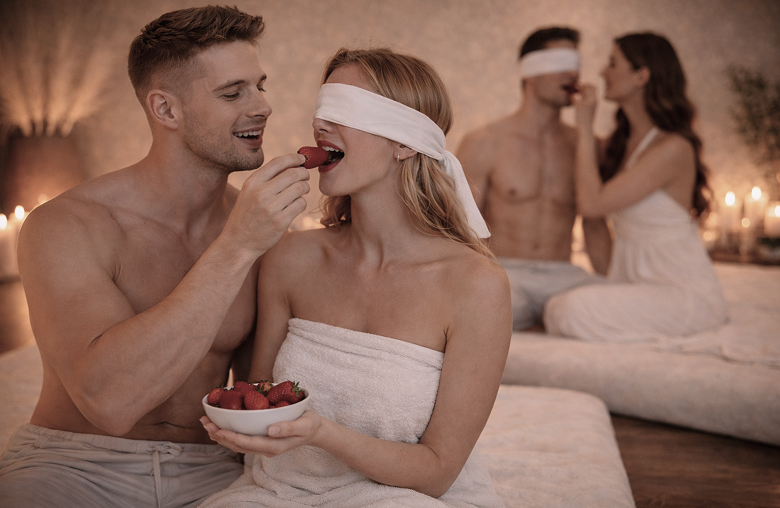
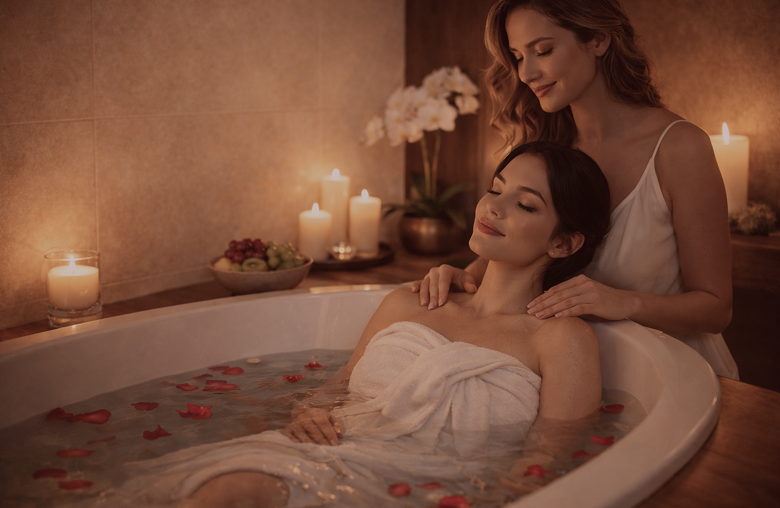
We offer tantric massages for men, women, and couples, not only on the level of experience, but also on the level of healing and personal or relationship development. We complement the massages with other tantric rituals, such as the ritual of a tantric bath or the ritual of awakening the senses, which enrich and deepen the tantric massage.
We also teach tantra and tantric massages. We offer courses for individuals or couples who want to learn to relax through mutual massage, deepen their experience with the help of breathing and meditation techniques, or learn to make love tantrically. Within the school of tantric sex, we teach people to communicate about mutual needs and fantasies, as well as what men and women actually need in the area of sexuality. At the beginning, we talk with clients about what they want to learn with us, and based on that we prepare the course directly tailored to them.
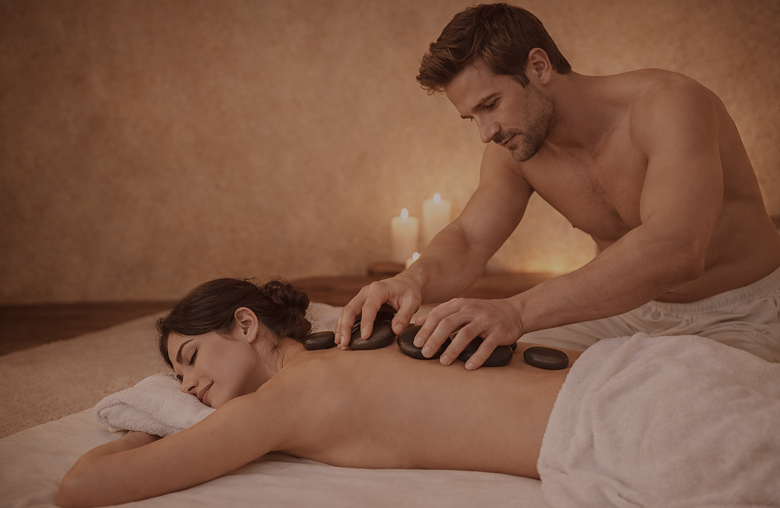
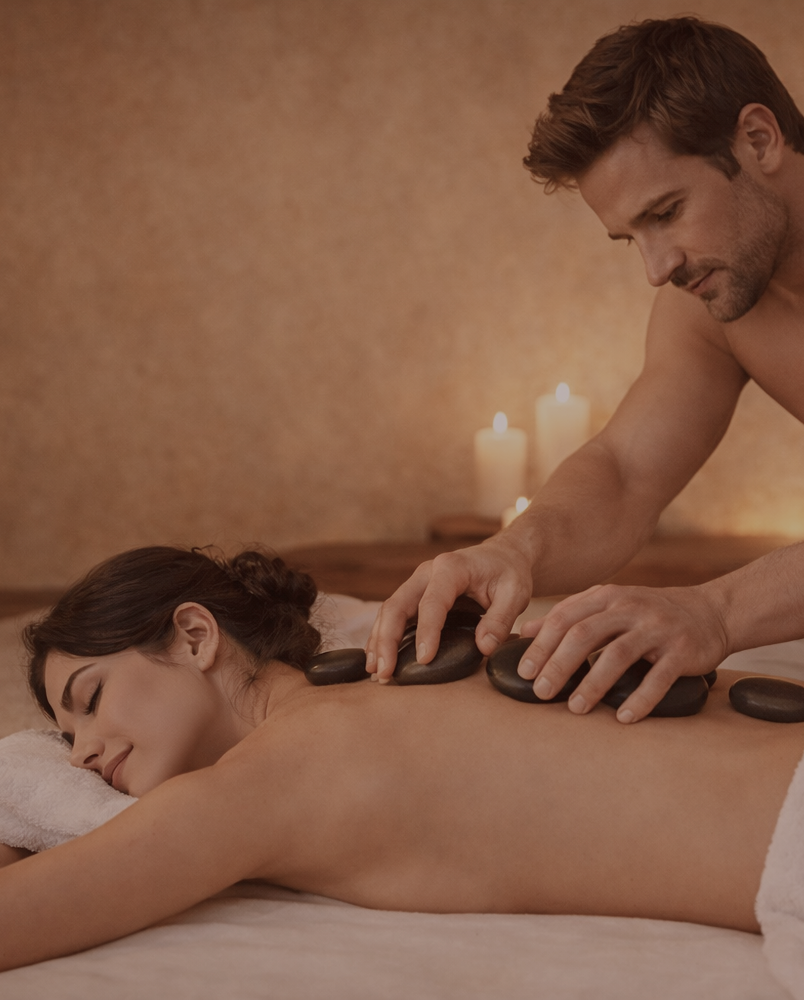
However, we also teach professional tantric therapists who, in addition to understanding tantric philosophy and mastering tantra massage techniques perfectly, must also be able to work with the intention and boundaries of tantric massage so that they can guide clients through tantric experiences. These courses are therefore longer and go deeper. In our wellness area, it is also possible to book rehabilitation massages, aromatherapy massages, or, for example, hot stone massages. We simply try to offer care and conscious touch also to people who would not yet dare to try tantra.
Can we say which services are in the greatest demand and what your “average” client is like? Do more men or women come, or perhaps couples?
Coming for a tantric massage is certainly easier for men, because they are often more open and less shy than women. Men often bring their partner after some time, because sharing tantra as a couple and living it not only with us in the studio but also at home is the dream of everyone who has been devoted to tantra for a while. Allowing yourself to experience arousal in the presence of your partner during a shared tantric massage is a very bonding experience that opens communication within the couple and awakens trust and mutual acceptance. However, women are also coming increasingly often, and in addition to a deep experience they often seek healing of past traumatic experiences in the tantric massages.
I would say that many people perceive tantric massage only as a “disguised” erotic massage, in which the primary goal is climax. But what is tantric massage mainly about, and how does it proceed?
Unfortunately, this perception of tantra in society is based on the greed of many owners of “tantric centers” who do not understand tantra at all. Tantric massage became very popular about ten years ago, which unfortunately also brought with it the fact that half of erotic masseuses renamed themselves “tantric” overnight. However, there is a huge difference between erotic and tantric massage. Erotic massage is often impersonal stroking by a pretty girl in sexy lingerie, which has little to do with tantric massage. It is focused only on the result in the form of the client’s sexual satisfaction, and the masseuse is more of an object for which the client pays.
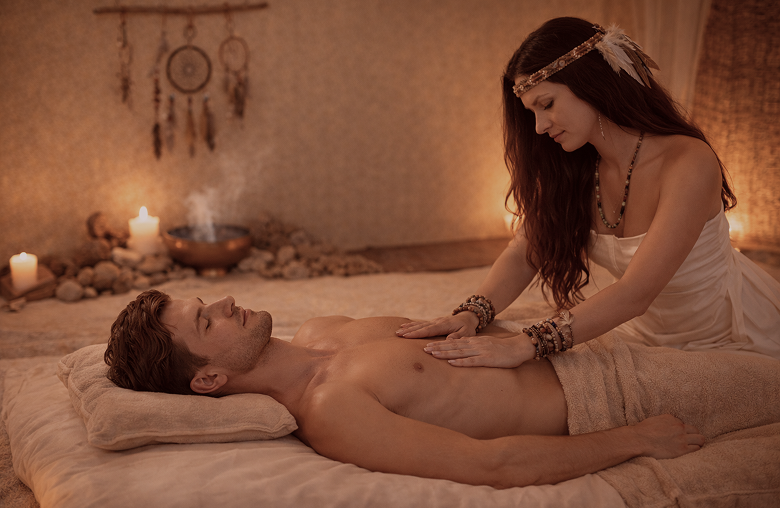
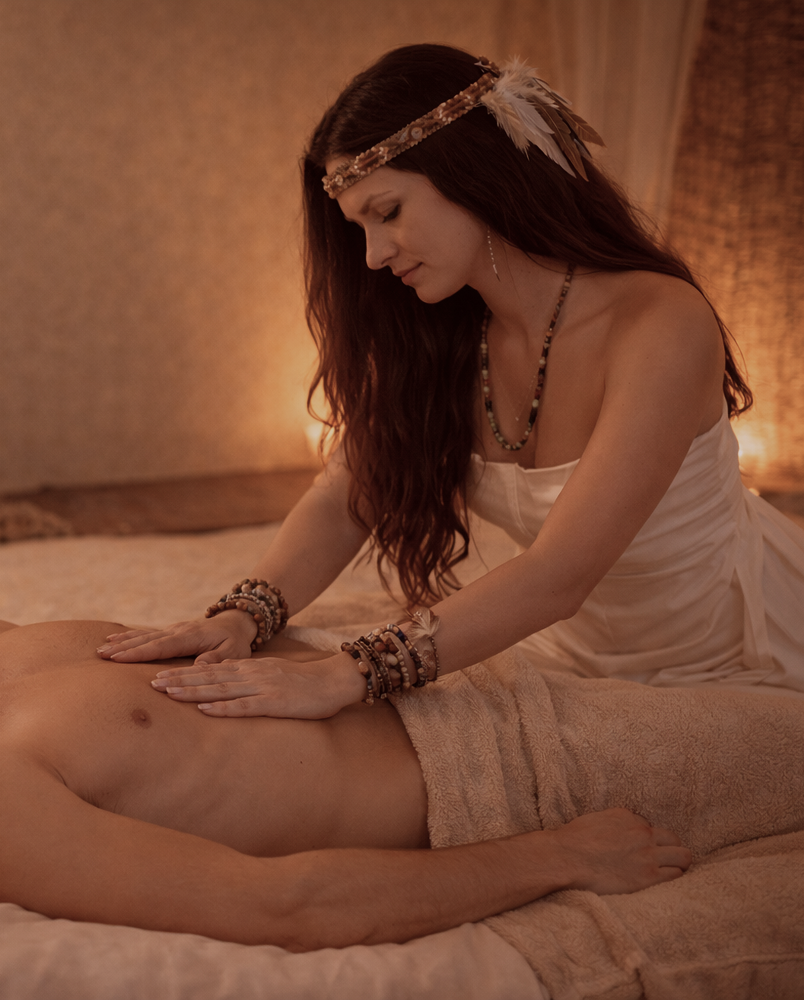
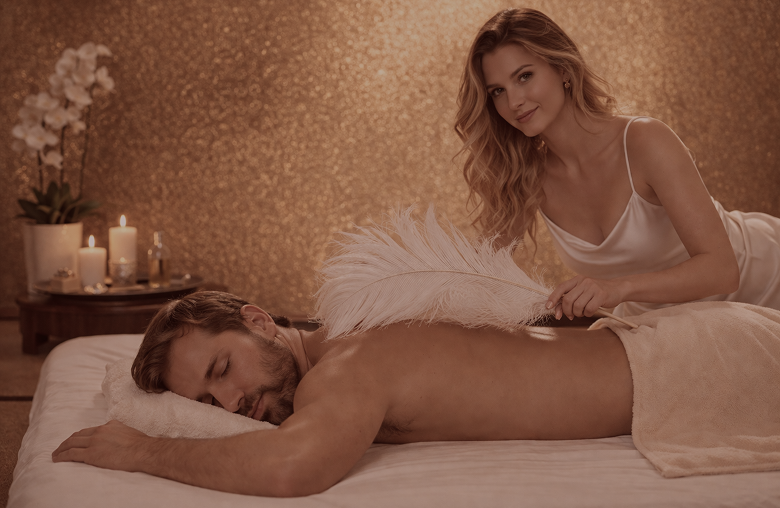
Tantric massage, on the other hand, is based on the experience of deep human closeness, respect, and mutual attunement between the receiving person and the giving person, and it is not about orgasm at all. The giving person is a guide who first teaches the client tantric breathing techniques to deepen the entire experience and then guides them through the entire ritual, during which, with the help of massage and breathing techniques, the whole body and mind gradually relax. For the tantric massage we use body-therapeutic techniques to release tension, hot towels for deep relaxation, feathers, soft furs, or silk scarves to feel tenderness and gentleness, and then also warmed oil enriched with oriental fragrant essences to relax the whole body. If trust and a sense of safety awaken, sexual energy, which is the strongest energy in the body, also begins to awaken gradually during the tantra massage. In tantra, we try to experientially connect the pelvic area with the heart and consciousness and help the client feel complete surrender. Tantric massage has no goal and offers a safe space to explore the experiences of one’s own body and enjoy loving touch and care, which we often desperately lack.
If a couple comes to you for a shared tantric massage, they should presumably be clear on the issue of jealousy. Haven’t you encountered in your practice, for example, that one of the couple had a problem with a stranger touching their partner even in the most intimate places? And who tends to have a bigger problem with potential jealousy? Some might even perceive it as a form of relationship infidelity. To what extent do you encounter prejudice in your practice?
It is also okay if the couple is not clear. Tantra is also about experimenting and discovering, and people often discover things about themselves that they did not know before. Before every tantric massage, we additionally offer, free of charge, space for a conversation in which we talk with the receiving people about how tantric massage proceeds and what is and is not okay for them. Tantric massage aims to connect the couple, not to divide them, which is why we give both partners the option to stop the tantra massage at any time during it (for themselves or for their partner) and say that this is their boundary of intimacy for today and they do not want to go further. At the same time, we explain that they should not force themselves into anything, but should listen to their feelings and be guided by them. In tantra there is no “right” or “wrong,” and tantric massage is a path on which the receiving partners can go together in small steps toward mutual respect, tolerance, and openness. This path cannot be sped up and it is not good to run it as a sprint, but it is suitable to walk it nicely and experience each step.
Tantric massage has nothing to do with infidelity. There is no lovemaking during it, no mutual touching between the receiving person and the giving person, nor the formation of a relationship beyond the framework of tantric massage. Tantra offers a safe space in which the receiving person, under the guidance of an experienced guide, discovers the experiences of their own body, their needs, and their energetic potential, which they then bring into their relationship life, thereby deepening and enriching it. Jealousy often arises from the fear that we will lose our partner or that they will like it more somewhere else than with us. But if we perceive the relationship as a path of mutual growth, then everything a person experiences in a tantric massage and brings into the relationship is, in fact, a path of one toward the other.
In recent days, the case of Richard Vojík, a tantric guru, has stirred Czech media waters. Several clients accused him of rape. What would you say to that as the owner of a tantric center? What is your position and how do you personally perceive the whole case?
I perceive the whole case of Richard Vojík as a major crossing of boundaries and abuse of trust and authority from the position of a lecturer. No teacher should definitely abuse the trust with which clients turn to them to satisfy their personal and sexual needs. If a lecturer enters into sexual contact with clients, it is abuse, and that person definitely should not work with people. Tantra, if it is taught and passed on correctly and ethically, is a healing philosophy that can help people on many levels. It therefore places even greater demands on teachers. There is no art in bringing people to experiences. The art is helping them integrate and process them. Because of organizing seminars, I completed a five-year psychotherapy training in Gestalt in order to be able to handle the processes that may arise in a course.
Since tantra works with intimate topics, sexual energy, and trust, any crossing of boundaries can seriously harm clients. In the professional provision of tantric massages, therefore, our center places great emphasis on ethics and the personal responsibility of the masseurs. Any wrongdoing has deep negative consequences. Every masseur and masseuse in our center is therefore bound by the Quality Standards and an ethical code, which I created for tantric massage as a profession. Violating it would lead to immediate termination of cooperation and further penalties.
How do you choose your employees? And how do you actually vouch for them to the client? After all, many clients probably think that—especially in the case of men—it must be a person mature in the sense of self-control and working with the mind and body. After all, a masseur or masseuse can also feel arousal, or is that not the case?
We take great care in selecting masseurs and masseuses. A professional tantric therapist must be a personally mature person with perspective, who has a relationship to giving touch as well as to tantra, and whose motivation is purely therapeutic, and who can therefore remain only in the role of a guide. Our masseurs and masseuses then go through more than 120 hours of training, where we teach them to work with the body, deepen their knowledge of tantric philosophy and ethics, initiate them into the art of tantric massage, meditation, breathing work, and handling boundaries. Part of the training includes several self-experiential massages. Our center also has subsequent ongoing supervision led by an experienced psychotherapist and supervisor. Our therapists also strive to further educate themselves not only in tantra but also in tantra massage techniques and philosophy.
The masseurs also work with their feelings, which may include arousal, desire, or attraction. But this is where the aforementioned ethics come into play, because the giving person must never cross the boundaries of tantric massage, even if the client themselves wanted it. Once trust is lost, all previous work would be pointless.
If during training we get the impression that a person is not ready to be a guide, we prefer not to establish cooperation at all rather than endanger our clients. All of our masseurs are then bound by a rather strict contract intended to protect our clients, the masseurs, and the reputation of our center.
And finally—what experience (feeling) should a client take home after a tantric massage?
A client should leave above all with the feeling that they experienced several beautiful hours during which someone took care of them and gave them love and care. They should be rested and physically and mentally relaxed and full of new energy. If the tantric massage goes well, it can also touch a spiritual experience; the client may experience healing of fear or shame, feel connection throughout their whole body, and often also inspiration for further life.



Lea Kotková is a Czech journalist, editor, author, and therapist who contributes to media outlets including Svět ženy, OnaDnes.cz, and Žena.cz, while also working with EFT therapy, numerology, and card reading.


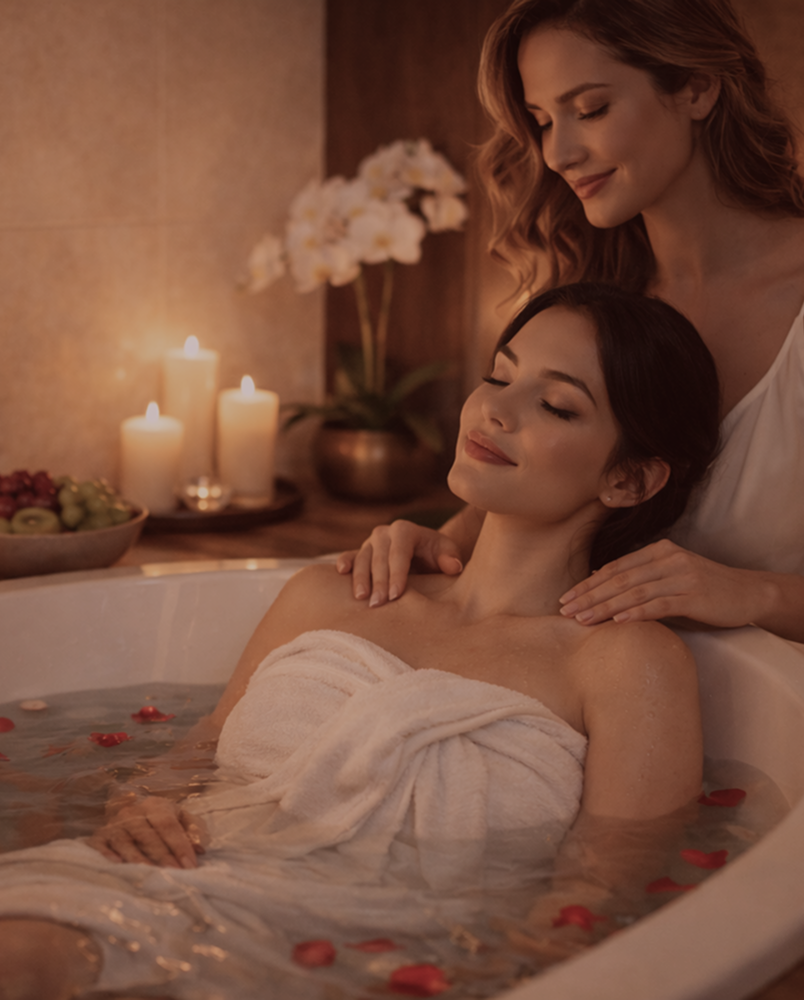






















 Our Studio

